
For teens, parents and adults

So many voices.
Whose are they?

Some voices in your head are yours. Many are borrowed from parents, teachers, friends and screens. Learn to recognise each one, and find the voice that is really yours.

From the Whose Voice Is That? books by Ravi Lall

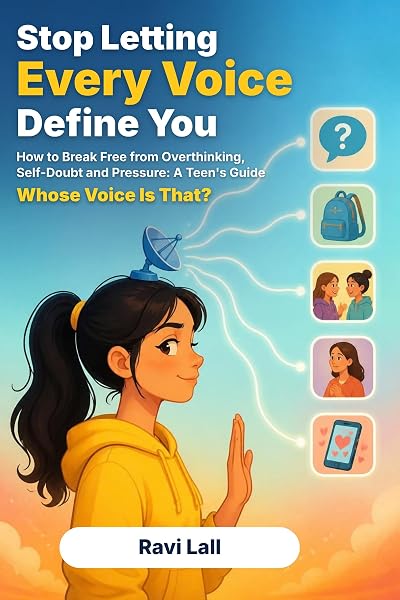
A teenager in a yellow hoodie looks up at a sunrise sky while sound waves drift in from all sides
"You need top marks."
Parent
"Everyone's doing more than you."
Phone
"You're not a maths person."
Teacher
"Don't say anything weird."
Friend
"I actually love art."
Me

Why it's hard

The loudest voice is often not your own

They come from everywhere

Family, teachers, friends, social media. Most come from people who care, which makes them hard to question.

They sound like you

Once a voice moves inside your head, it speaks as "I". A guess or a worry starts to feel like a fact.

They get louder under stress

Before exams, after a bad mark, late at night with a phone. That's when sorting them matters most.

The method

Stop. Listen. Ask.

One simple habit, taught in both books. It takes ten seconds and works anywhere: in an exam hall, at the dinner table, or scrolling at midnight.

1

Stop

Notice the voice. You can't sort a thought you haven't spotted.

2

Listen

Hear what it's really saying, and check what kind of thought it is.

Fact?Feeling?Guess?
3

Ask

Whose voice is that? Name where it came from. Then decide if it gets to stay.

Try it on one of your thoughts

A physics teacher's view

Find your signal through the noise

In physics, a weak signal can hide under a lot of noise. Your own voice works the same way. Each borrowed voice you recognise is noise you can filter out, and your own signal gets clearer.

2 of 5

The books

Whose Voice Is That?

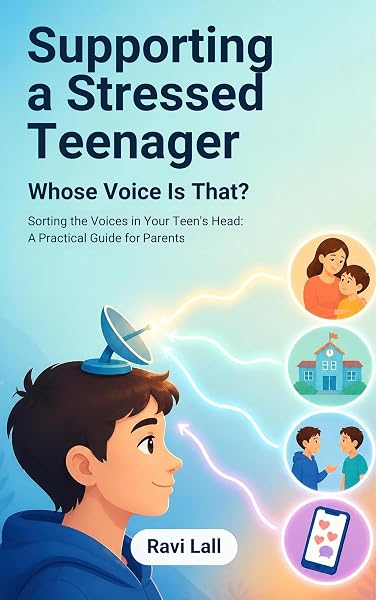
Two books, one idea. One for teenagers, one for the parents who love them.

Your inner voice started as other people's voices

Psychologists who study inner speech find it grows out of real conversations from childhood. The voices of parents, teachers and friends are taken in and become the way we talk to ourselves. That's why a borrowed voice can sound exactly like your own.

Alderson-Day and Fernyhough, Psychological Bulletin, 2015 ↗
See the research

Struggling right now? Free, confidential help is a call away.

Find a helpline